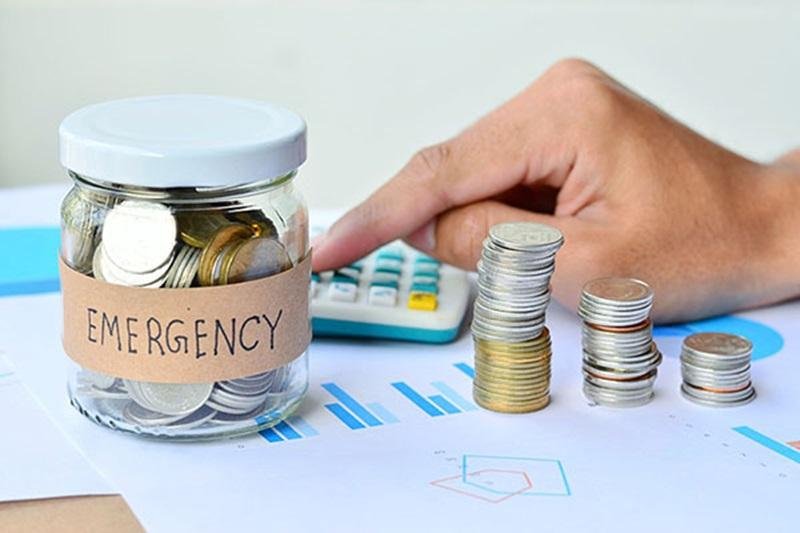
An emergency fund is money set aside to deal with unexpected expenses or a sudden loss of income without having to rely on expensive borrowing or sell long-term investments at the wrong time.
It is one of the basic building blocks of financial security.
But how much should you actually keep in an emergency fund?
You will often hear that three to six months of expenses is the appropriate amount. That can be a useful starting point, but it is not a rule that works equally well for everyone.
The right emergency fund depends on your income, employment situation, essential expenses, family responsibilities, debt and how quickly you could replace your income if circumstances changed.
This guide explains how to calculate an emergency fund based on your own circumstances.
What Is an Emergency Fund?
An emergency fund is money reserved for genuine financial emergencies.
Examples can include:
- Unexpected medical expenses
- Sudden loss of employment or income
- Major vehicle repairs
- Urgent home repairs
- Essential family expenses
- Unexpected travel for a family emergency
- Other significant expenses that could disrupt your normal finances
An emergency fund is not normally intended for planned expenses such as vacations, new clothing, routine maintenance or annual school fees.
Those expenses should ideally be included in your normal budget or planned separately.
Why Do You Need an Emergency Fund?
Unexpected expenses are part of financial life.
Without an emergency reserve, an unexpected Rs. 100,000 expense could mean:
- Using a credit card
- Taking a personal loan
- Borrowing from family or friends
- Selling an investment
- Delaying another important financial commitment
Having accessible emergency savings gives you another option.
It can also protect your long-term investment plan.
For example, imagine that markets have fallen significantly and you suddenly need money for an emergency. Selling investments at that point may turn a temporary market decline into a permanent loss.
An emergency fund can reduce the need to make that decision.
How Much Should You Keep?
A practical way to calculate your emergency fund is to start with your essential monthly expenses.
For example:
| Essential Expense | Monthly Amount |
|---|---|
| Housing | Rs. 60,000 |
| Food & groceries | Rs. 35,000 |
| Utilities | Rs. 15,000 |
| Transport | Rs. 20,000 |
| Education/family commitments | Rs. 20,000 |
| Debt payments | Rs. 25,000 |
| Other essential expenses | Rs. 15,000 |
| Total essential expenses | Rs. 190,000 |
If you decide that six months of essential expenses is appropriate:
Rs. 190,000 × 6 = Rs. 1,140,000
Your target emergency fund would therefore be approximately Rs. 1.14 million.
The calculation is simple. The difficult part is deciding how many months you need.
Three Months, Six Months or More?
There is no single correct number.
Three Months
A smaller emergency fund may be reasonable when:
- Income is highly stable
- Employment is relatively secure
- Household expenses are manageable
- There are few dependants
- Other financial resources are readily available
Three months can provide a useful initial safety buffer.
Six Months
Six months is a commonly used target for people who want a stronger financial cushion.
It may be appropriate when:
- You have significant monthly commitments
- You support a family
- Finding another source of income could take time
- You have substantial debt
- Your income is relatively stable but not guaranteed
Nine to Twelve Months
A larger reserve may make sense when income is uncertain or replacing it could take considerable time.
For example:
- Self-employed individuals
- People working in highly variable industries
- Households dependent on one major income source
- People with significant family responsibilities
- Individuals approaching retirement or a major career transition
The objective is not to maximize the emergency fund indefinitely. It is to hold an amount appropriate for the risks you actually face.
Use Essential Expenses, Not Every Expense
One common mistake is to calculate the emergency fund using total monthly spending without distinguishing between essential and discretionary expenses.
Suppose your normal monthly spending is Rs. 250,000.
After reviewing your expenses, you determine that Rs. 180,000 represents essential commitments and Rs. 70,000 is discretionary.
A six-month emergency fund based on essential expenses would be:
Rs. 180,000 × 6 = Rs. 1,080,000
You may not need Rs. 1.5 million simply because your normal lifestyle costs Rs. 250,000 per month.
However, this distinction should be applied sensibly. Some expenses that appear discretionary may become important during a difficult period.
Consider Your Income Stability
The number of months you need should reflect how predictable your income is.
Someone with a highly stable salary may have a different emergency-fund requirement from someone whose income depends heavily on commissions, freelance work or business activity.
Ask yourself:
- How secure is my main income?
- How long might it take to find another job?
- Do I have alternative income sources?
- Is my household dependent on one income?
- Could my income fall temporarily rather than disappear completely?
The less predictable your income, the more useful a larger reserve can become.
Consider Your Family Responsibilities
Your emergency fund should reflect the people who depend on your income.
A person living alone with limited commitments may have a different financial risk profile from someone supporting children, parents or other family members.
Consider expenses such as:
- Education
- Healthcare
- Family support
- Housing
- Transportation
- Essential household costs
Family responsibilities can make unexpected expenses both more frequent and more difficult to postpone.
Consider Your Debt
Debt is another important factor.
If you have significant monthly loan or financing payments, those obligations may continue even when your income is temporarily disrupted.
For example, if essential expenses are Rs. 150,000 per month but your debt payments account for Rs. 50,000 of that amount, you need to consider whether those payments would continue during an income interruption.
An emergency fund should provide enough liquidity to help you meet essential obligations without immediately resorting to additional borrowing.
Emergency Fund vs. Savings for Planned Expenses
Not every unexpected-looking expense is actually an emergency.
Suppose your car needs routine maintenance every year.
That is a predictable expense, even if you do not know the exact date or amount.
Similarly:
- Annual school fees
- Insurance premiums
- Property taxes
- Regular vehicle maintenance
- Planned travel
- Annual subscriptions
should generally be planned for separately.
A useful budgeting approach is to create sinking funds for known future expenses.
This keeps your emergency fund available for genuine emergencies.
Where Should You Keep Your Emergency Fund?
An emergency fund has a different purpose from a long-term investment portfolio.
The main priorities are generally:
Accessibility + capital preservation + reasonable return
You should be able to access the money when you actually need it.
Depending on your circumstances and available financial products, this may include suitable savings accounts, cash-management products or relatively low-risk and liquid investment options.
The exact product should be evaluated based on:
- Liquidity
- Risk
- Withdrawal restrictions
- Expected return
- Fees
- Tax implications
- How quickly the money can be accessed
Do not choose an emergency-fund vehicle solely because it offers the highest advertised return.
An emergency fund that cannot be accessed when needed is not doing its job.
Should Your Emergency Fund Be Invested?
This depends on what you mean by “invested.”
Money required for a genuine emergency should generally not be exposed to substantial market volatility simply to pursue higher returns.
For example, equity investments can lose significant value over short periods.
If an emergency occurs during a market downturn, you could be forced to sell at an unfavorable time.
Long-term investments and emergency reserves therefore serve different purposes.
The emergency fund is primarily about financial resilience, while long-term investments are about growing wealth over time.
What About Inflation?
Keeping large amounts of money in cash for many years has another issue: inflation reduces purchasing power.
That does not mean your emergency fund should automatically be placed in higher-risk investments.
Instead, review the size of your emergency fund periodically.
If your essential monthly expenses rise from Rs. 180,000 to Rs. 220,000, your previous six-month target of Rs. 1.08 million is no longer equivalent to six months of current essential expenses.
Your emergency fund should therefore be reviewed when your financial circumstances change.
What If You Cannot Build the Full Fund Immediately?
Do not let the ideal target prevent you from starting.
If your calculated target is Rs. 1 million but you currently have no emergency savings, your first objective could be building an initial cash buffer.
For example:
Stage 1: Build an initial emergency reserve.
Stage 2: Increase it toward three months of essential expenses.
Stage 3: Evaluate whether six months or more is appropriate.
This makes the process manageable.
You can also automate a regular transfer into your emergency fund after receiving your income.
When Should You Use Your Emergency Fund?
Before withdrawing money, ask:
- Is the expense unexpected?
- Is it necessary?
- Can it reasonably be postponed?
- Is there another appropriate source of funds?
- Would paying it from normal monthly income create financial stress?
Examples of potential emergency-fund uses include a sudden medical bill, unexpected job loss or a major essential repair.
Buying a new phone because your current phone is slightly outdated would normally not qualify as an emergency.
The distinction matters because frequent withdrawals can gradually turn an emergency fund into a general spending account.
What Happens After You Use It?
Using your emergency fund is not a failure.
That is what the fund is there for.
The important step is to rebuild it.
Suppose you have Rs. 1 million saved and use Rs. 250,000 for an unexpected medical expense.
Your emergency fund is now Rs. 750,000.
Once the immediate emergency has passed, review your budget and establish a plan to restore the reserve.
You may temporarily reduce discretionary spending or redirect some additional income toward rebuilding the fund.
Review Your Emergency Fund Regularly
Your emergency-fund target should not remain unchanged forever.
Review it when there is a significant change in:
- Income
- Employment
- Housing costs
- Family responsibilities
- Debt
- Education expenses
- Healthcare requirements
- Cost of living
A major salary increase may change your lifestyle and expenses. A new loan may increase your required reserve. Children entering university may significantly change household commitments.
Your emergency fund should evolve with your financial circumstances.
A Simple Emergency Fund Calculation
You can use this basic formula:
Emergency Fund Target = Essential Monthly Expenses × Number of Months
For example:
Essential monthly expenses = Rs. 200,000
Target = 6 months
Emergency fund = Rs. 200,000 × 6 = Rs. 1,200,000
Then consider whether your circumstances justify a smaller or larger reserve.
The calculation provides a starting point. Your financial situation determines the appropriate target.
Final Thoughts
An emergency fund is not designed to maximize investment returns.
Its purpose is to provide financial flexibility when something unexpected happens.
Start by calculating your essential monthly expenses. Then consider your income stability, family responsibilities, debt and other financial risks when deciding how many months of expenses you should hold.
Three months may be enough for some people. Six months may provide a more substantial buffer for others. People with less predictable income or greater responsibilities may choose to hold more.
The important thing is to have a deliberate target rather than an arbitrary amount.
An emergency fund gives your financial plan room to absorb unexpected events without forcing you to make rushed decisions.