
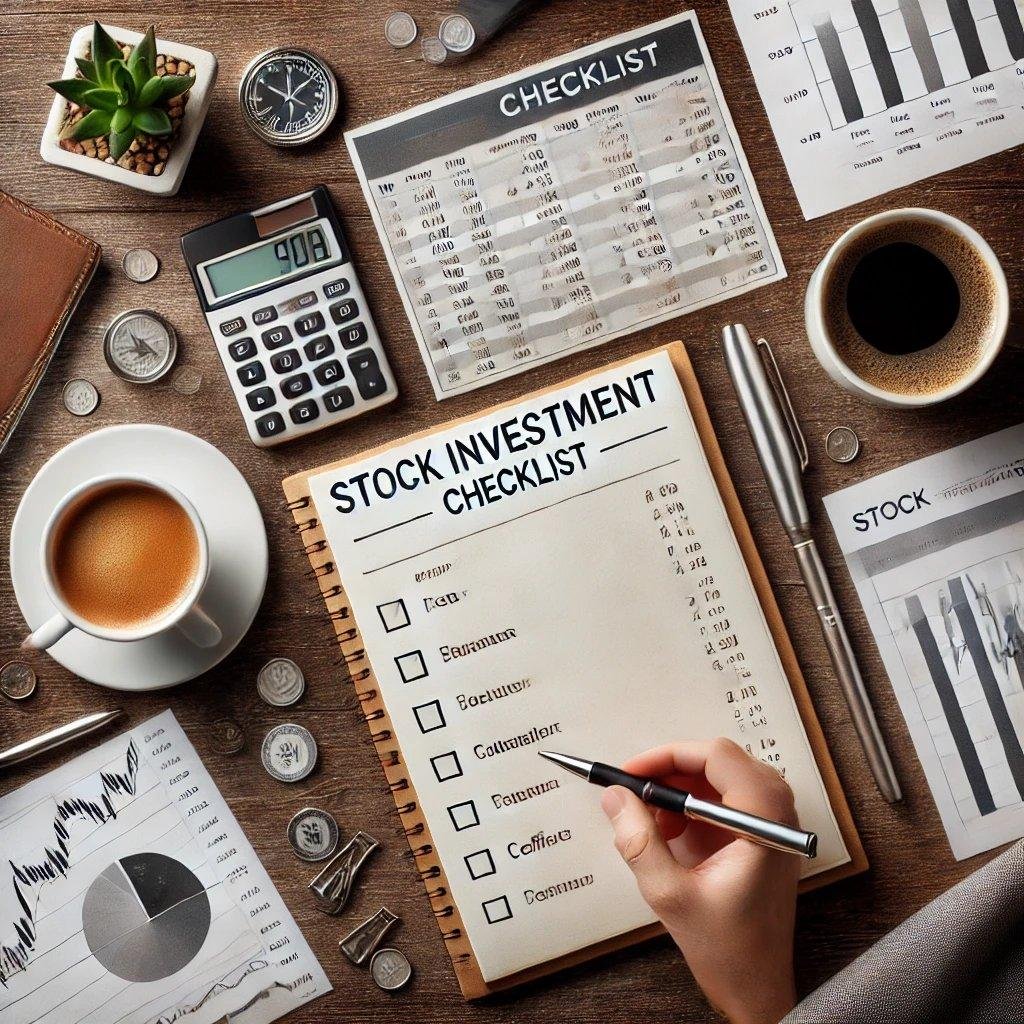
An investment checklist helps you evaluate an investment opportunity before committing your money. It encourages you to assess your financial goals, risk tolerance, expected returns, investment costs, liquidity needs, and the credibility of the investment provider. Whether you are considering stocks, mutual funds, or other assets, following a structured checklist can help you avoid common mistakes and make more informed financial decisions.
Investing does not begin when you press the “buy” button.
It begins before that.
A good investment decision starts with understanding why you are investing, when you need the money and how much risk you can tolerate.
1. What Is the Goal?
Ask:
Why am I investing this money?
Possible goals include:
- retirement
- education
- property
- wealth building
- income
- a specific future expense
A goal gives the investment a purpose.
2. When Will You Need the Money?
Time horizon is critical.
Money needed next year should generally be treated differently from money you won’t need for 20 years.
A longer horizon may provide greater ability to tolerate market fluctuations, but it does not eliminate investment risk.
3. Do You Have an Emergency Fund?
Don’t invest money that you may suddenly need for basic financial security.
Build an appropriate emergency reserve first.
See Emergency Fund for a practical framework.
4. Do You Have Expensive Debt?
If you have high-cost debt, consider whether reducing that debt should come before making additional investments.
Read Should I Invest or Pay Off My Loan First?
5. What Return Are You Assuming?
Be careful with statements such as:
“This investment will give me 15% every year.”
No investment should be treated as guaranteed simply because it produced a particular historical return.
Use realistic assumptions.
6. What Could Go Wrong?
Before investing, ask:
What happens if the value falls 20%?
If the answer is:
“I would immediately need the money.”
then the investment may not be suitable for that objective.
7. Is the Investment Diversified?
Concentration can increase risk.
Consider whether too much of your financial wealth is exposed to:
- one company
- one sector
- one asset
- one market
- one currency
Diversification cannot eliminate risk, but it can help manage concentration risk.
8. Understand the Costs
Ask about:
- management fees
- transaction costs
- taxes
- exit charges
- other applicable expenses
A return should be considered after relevant costs.
9. Understand How You Earn a Return
Is your expected return coming from:
- capital appreciation?
- dividends?
- interest?
- profit distributions?
Understand the mechanism.
10. Check the Investment Provider
Before committing significant money, verify that the provider and product are legitimate and appropriately regulated where applicable.
Be particularly cautious about:
- guaranteed high returns
- pressure to invest immediately
- referral schemes
- anonymous operators
- social-media investment offers
- requests to transfer money to unrelated accounts
SECP has repeatedly warned investors about unauthorized investment platforms and fraudulent schemes.
11. Don’t Invest Because Someone Else Made Money
A friend’s investment may have worked.
That doesn’t mean the same investment is suitable for you.
Ask:
Would I still buy this investment if I had never heard about someone else’s profit?
12. Write Down Your Reason
Before investing, write one sentence:
“I am investing Rs.___ for ___ years to achieve ___.”
If you cannot complete the sentence, you may not yet have a clear investment objective.
13. Decide How You Will Review It
Don’t check every price movement and react emotionally.
Decide beforehand:
- when you will review
- what benchmark matters
- what would cause you to change the investment
- what level of risk is acceptable
14. Track Your Actual Return
Record:
- Investment Date
- Amount Invested
- Additional Contributions
- Withdrawals
- Distributions
- Current Value
- Total Return
- Annualized Return where appropriate
The Investment Return Calculator can help.
A Simple Pre-Investment Checklist
Before investing, ask:
Goal?
Time horizon?
Emergency fund?
Debt position?
Risk tolerance?
Diversification?
Costs?
Taxes?
Provider/product legitimacy?
Expected return realistic?
Exit plan?
If you cannot answer several of these questions, slow down.
How to Use an Investment Checklist
An investment checklist helps you evaluate opportunities systematically before investing your money. Use your investment checklist to review the potential return, level of risk, fees, liquidity, investment horizon, and the credibility of the provider. Before making a final decision, confirm that the investment aligns with your financial goals and that you can afford potential losses.
Practical Takeaway
Good investing is not about finding the investment with the biggest advertised return.
It is about finding an appropriate investment for:
your goal + your time horizon + your risk tolerance + your financial position.
Take your time.
Understand what you are buying.
Know what can go wrong.
And never invest money you cannot afford to have exposed to investment risk.
Related Equicio Guides and Tools
- Investing for Beginners
- Investment Return Calculator
- Compound Interest Calculator
- SIP Calculator
- Net Worth Calculator
- Emergency Fund
- Fraud Warning Signs
- How to Detect Financial Fraud
- Financial Tools and Calculators
Disclaimer
This article is for general educational purposes and is not investment, financial, tax or legal advice. Investments involve risk, including the possible loss of capital. Always verify the legitimacy and regulatory status of investment products and providers before committing money.