How to Calculate Real Investment Returns After Inflation

real investment return

An investment can increase in value while your purchasing power grows very little. This happens because the prices of goods and services tend to change over time, meaning the same amount of money may buy less in the future. That is why looking at investment gains alone can give an incomplete picture of financial progress. … Read more
Index Funds vs ETFs: Differences, Costs and How to Choose

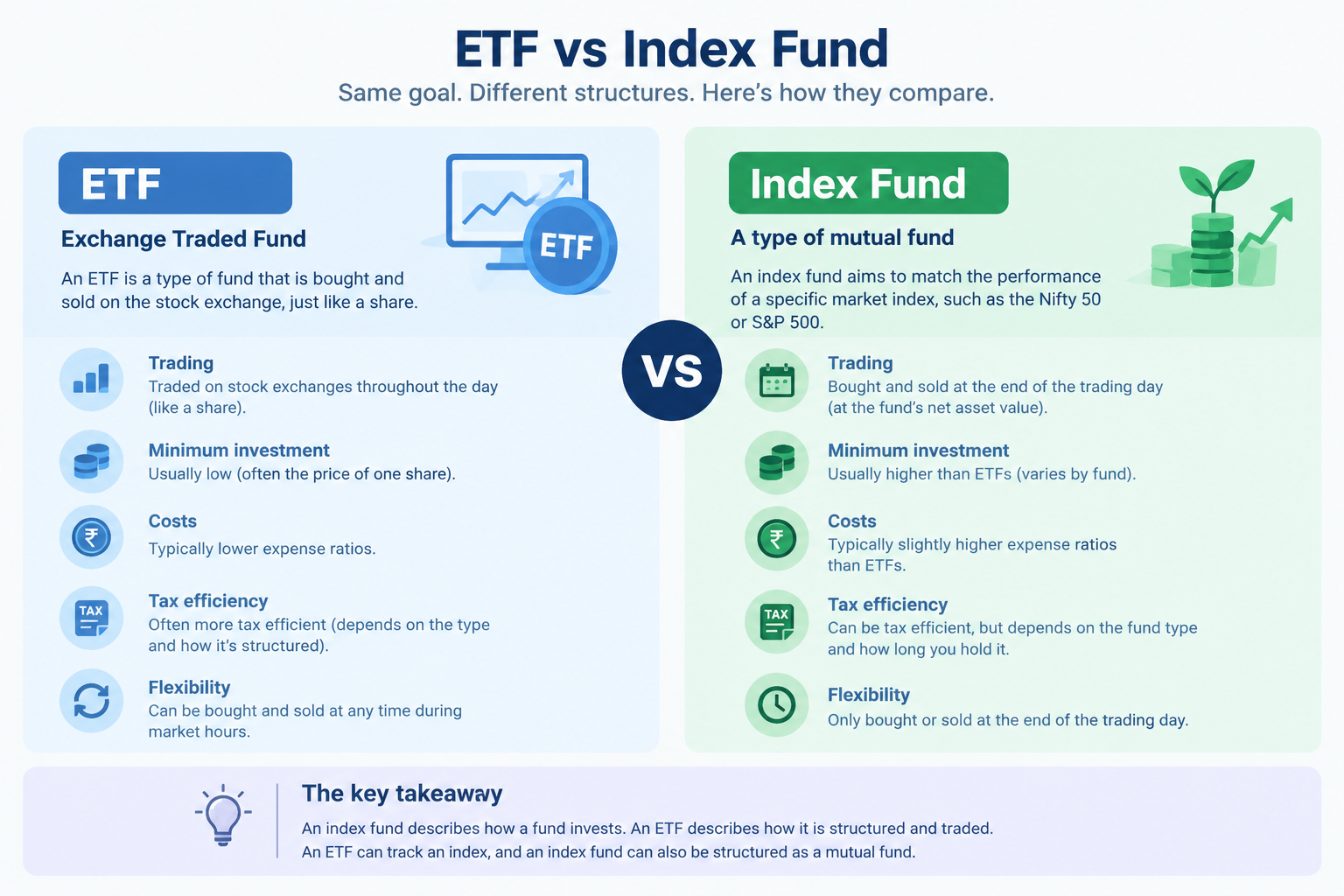
ETF vs Index Fund

ETF vs Index Fund is a common comparison for investors choosing a low-cost way to build long-term wealth. Although both can provide diversified investment exposure, they differ in structure, trading, costs, and tax treatment. Understanding these differences can help you choose an investment that fits your goals. Index funds and exchange-traded funds (ETFs) are popular … Read more

How to Start Investing: A Three-Stage Path for Beginners

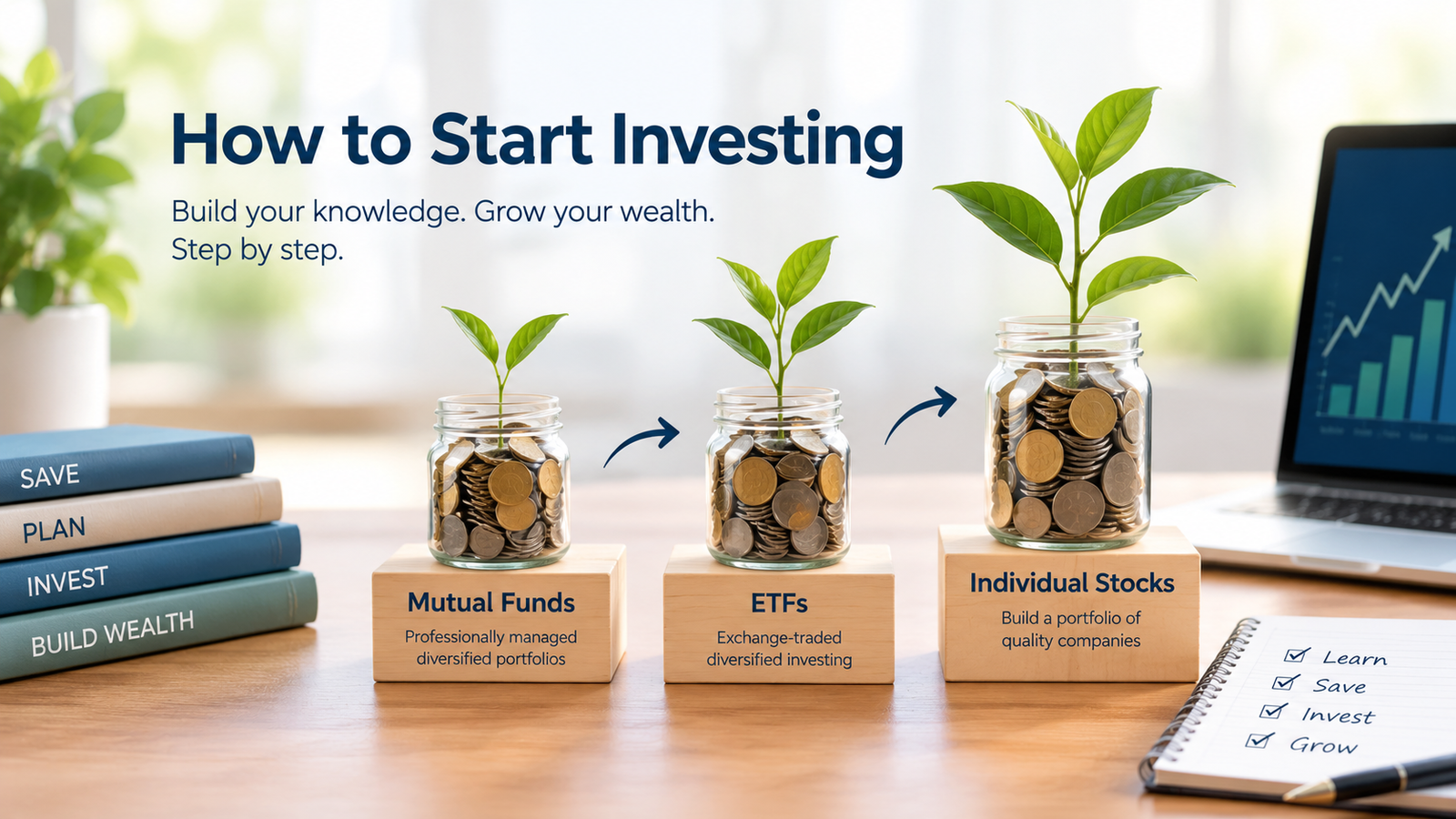
How to start investing through mutual funds, ETFs, and individual stocks

How to start investing is one of the most important questions for anyone who wants to build long-term wealth. Many beginners enter the stock market too quickly, buy investments without understanding their risks, and become discouraged when prices fall. A better approach is to develop your knowledge and confidence gradually. Rather than rushing into individual … Read more

Annualized Investment Return: Why Your Investment Return Isn’t the Same as Your Annual Return

Annualized investment return formula and growth example

Annualized investment return expresses an investment’s growth or decline as an equivalent yearly rate over a specified period. It helps investors compare investments held for different lengths of time and understand how the duration of an investment affects overall performance. The annualized investment return formula, commonly based on compound annual growth rate (CAGR), is useful … Read more

Lump Sum vs Monthly Investing: Which Strategy Fits You?

Lump sum vs monthly investing comparison

Lump sum vs monthly investing is an important decision for anyone looking to grow their money over time. Lump sum investing means investing a larger amount at once, while monthly investing involves contributing smaller amounts at regular intervals. Both approaches have advantages and risks, and the right choice depends on your available capital, investment horizon, … Read more

How to Measure Investment Performance Properly

how to measure investment performance

Measure investment performance to understand how effectively your money is growing over time. Simply looking at your current investment balance does not tell you whether an investment has delivered a good return. You need to consider your original investment, additional deposits, withdrawals, dividends, fees, taxes, and the period for which your money was invested. Whether … Read more

Before You Invest: A Practical Checklist for Your Next Investment

Investment checklist for evaluating financial opportunities

An investment checklist helps you evaluate an investment opportunity before committing your money. It encourages you to assess your financial goals, risk tolerance, expected returns, investment costs, liquidity needs, and the credibility of the investment provider. Whether you are considering stocks, mutual funds, or other assets, following a structured checklist can help you avoid common … Read more

My Practical Lessons from Investing in Stocks: What I’ve Learned Over Time

Lessons from Investing in Stocks

Practical lessons from investing in stocks, including diversification, managing risk, choosing an investment strategy, knowing when to buy or sell, and learning from personal experience.