
Beneficial Ownership Explained: Meaning, Verification and Banking Requirements

. Beneficial ownership structure showing company shareholders, ownership hierarchy and identification of the ultimate beneficial owner.

Beneficial ownership refers to the natural person or persons who ultimately own or control a company, legal entity, or arrangement, even when ownership is held through other companies, nominees, or intermediaries. Identifying beneficial owners is an important part of banking customer due diligence (CDD) and anti-money laundering (AML) controls. It helps financial institutions understand who … Read more
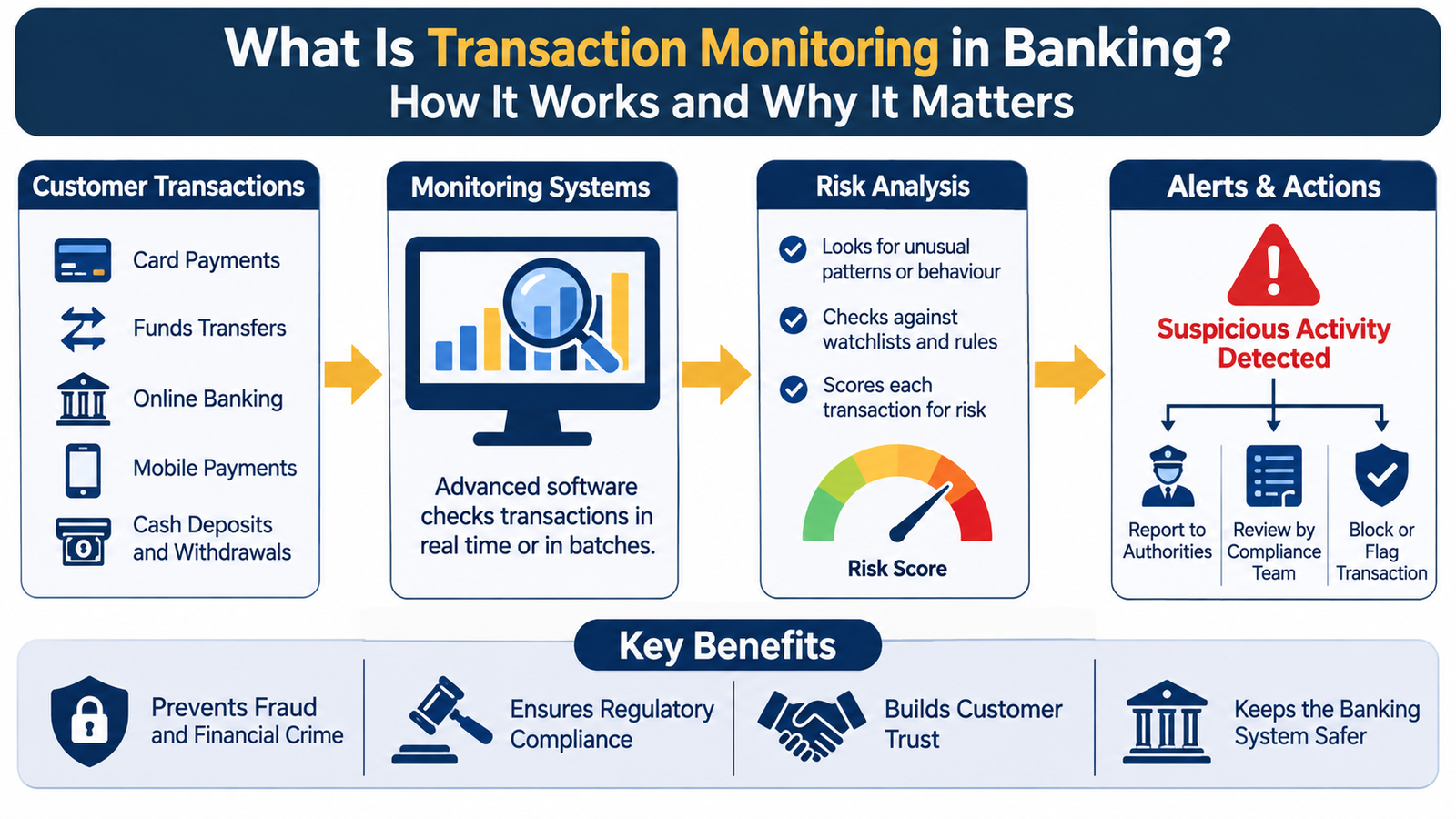

What Is Transaction Monitoring in Banking? How It Works

What is transaction monitoring in banking and how automated systems detect suspicious financial transactions.

Transaction monitoring in banking is the process of reviewing customer transactions to identify unusual patterns, activity inconsistent with a customer’s known financial profile, or transactions that may indicate money laundering, terrorist financing, fraud, or other financial crime. Banks use transaction monitoring as an important part of their anti-money laundering (AML) and financial crime prevention frameworks. … Read more

Customer Due Diligence vs Enhanced Due Diligence: Key Differences

Customer Due Diligence vs Enhanced Due Diligence is an important distinction in banking compliance and anti-money laundering (AML) procedures. Both processes help financial institutions understand their customers, assess potential risks, and identify activity that may require further investigation. However, they are not the same. Customer Due Diligence (CDD) establishes a customer’s identity, financial profile, and … Read more

Source of Wealth vs Source of Funds: Key Differences Explained

source of wealth vs source of funds

Source of wealth vs source of funds is an important distinction in banking and anti-money laundering (AML) procedures. Although the two terms are closely related, they refer to different aspects of a customer’s financial background. Source of funds focuses on the origin of money involved in a particular transaction, while source of wealth explains how … Read more

What Does Your Bank Statement Tell a Bank About You?

Bank statement analysis showing income, expenses and transaction patterns

Bank statement analysis helps individuals understand their income, spending, savings and financial activity. Banks may also review account statements as part of customer due diligence, transaction monitoring or financing assessments. Understanding the patterns in your bank statement can help you maintain accurate financial records and explain significant transactions when supporting information is requested. A bank … Read more

Anti-Money Laundering (AML): A Practical Guide for Bankers

anti money laundering AML banking compliance

Anti money laundering (AML) is the process of preventing and detecting the use of the financial system to disguise or move proceeds derived from criminal activity. For banks and other financial institutions, anti-money laundering (AML) is not simply a compliance requirement. It is an important part of protecting the integrity of the financial system, understanding … Read more